
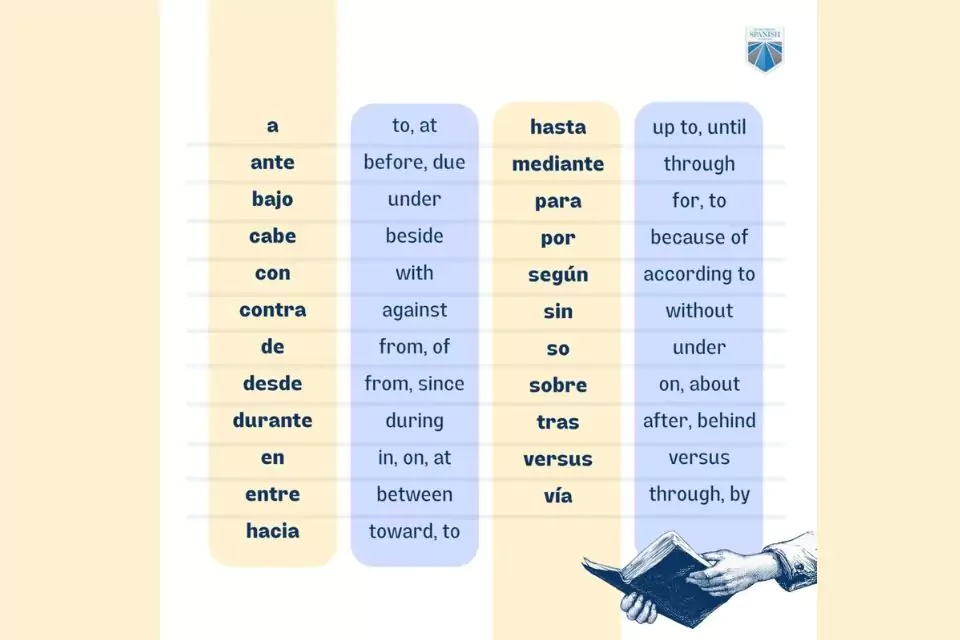
Prepositions act as the adhesive that binds language together, assisting in linking distinct elements within a sentence. In the intricate fabric of linguistic expression, prepositions assume an important role in directing communication and imparting subtle shades of meaning. Proficient proficiency with prepositions in Spanish is essential to achieving lucidity and consistency when speaking or writing language.
In Spanish specifically, where word arrangement can diverge notably from English syntaxes, grasping concepts related to prepositions becomes even more critical; they not only establish spatial-temporal relationships but also contribute considerably towards the overall cadence and rhythm of speech/writing style accustomed by native speakers communicating amongst themselves effectively.





Understanding Prepositions In Spanish
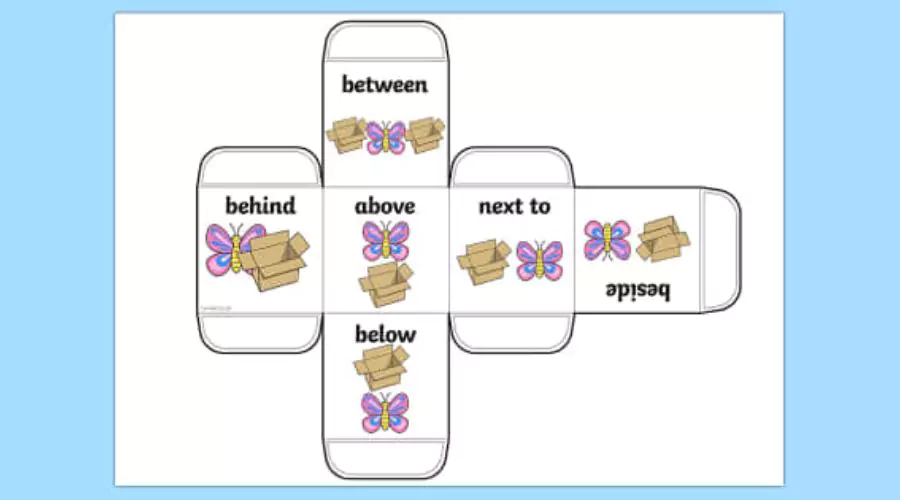
Prepositions, referred to as “preposiciones” in Spanish, play a critical role in language by joining various elements of a sentence together. They allow for clarity and precision when conveying ideas through establishing connections and providing context. Prepositions in Spanish have numerous meanings and applications ranging from spatial relationships to ownership or temporal concepts.
Although mastering them may take time and practice, the benefits are immeasurable; learners improve fluency while deepening their understanding of both language and culture. While navigating prepositions may pose difficulties along the way, achieving linguistic excellence is well worth pursuing – an invaluable destination deserving hard work on this journey! Delve into the world of Spanish prepositions to enhance your language skills and cultural understanding.
Simple Prepositions: Building Blocks of Spanish Grammar
The fundamental prepositions of Spanish grammar include “A,” “Con,” “De,” “En,” “Hacia,” Para, Por, and “Sin.” Each one carries a distinct meaning and usage, whether indicating destination (“a”), association (“con”), origin (de), or absence (sin). Mastery of these basic building blocks is crucial for constructing grammatically accurate sentences.
Compound Prepositions
Compound prepositions in Spanish, including “antes de,” “con respecto a,” “debajo de” and “fuera de,” add complexity beyond single-word options. Refinement of expression and precise communication is possible thanks to the enrichment offered by these structures that enhance the language with additional layers of meaning.
Importance of Proficiency in Spanish Prepositions
Mastering Spanish prepositions is crucial for achieving proficiency in the language and facilitating smooth communication. An extensive comprehension of these linguistic components not only fuels cultural immersion but also enhances appreciation of it. Delving deeper into Spanish prepositions enables learners to acquire valuable insights into their unique nuances that enrich connections with native speakers, promoting authentic interactions between them.
This enhances learning experiences by expanding horizons and opening doors to new opportunities which ultimately aid cross-cultural understanding and integration within the vast sphere of Spanish-speaking countries. Thus, dedicating time & effort to mastering this aspect can broaden one’s perception while simultaneously aiding an individual proficiently communicate in a culturally appropriate manner at all times! Benefit from expert instruction and structured support to refine your proficiency in Spanish prepositions.
Common Mistakes and Pitfalls
When manoeuvring through the intricate maze of common prepositions in Spanish, students frequently come across stumbling blocks like mistranslating or incorrectly positioning these tiny words within sentences. One may mistakenly interchange “para” and “por,” or misconstrue the roles played by prepositions such as “de” and “en”; resulting in faulty grammar constructions and misapprehensions.
Interactive Resources for Understanding Spanish Prepositions
Apart from conventional language learning approaches, interactive resources provide a lively means of comprehending the subtleties of Spanish prepositions. Websites, mobile applications, and online communities grant access to a vast range of engaging exercises, quizzes, and tutorials that enhance comprehension as well as retention.
Multimedia materials such as videos, audio recordings, and interactive games are often included on these platforms to engage learners while reinforcing their cognitive processes through various methods. By adding an element of interactivity into one’s study practices, enthusiasts can delve deeper into the understanding of Spanish prepositions while simultaneously enjoying themselves within an immersive learning experience. Discovering interactive resources is essential for those striving toward linguistic mastery! Engage with immersive exercises and quizzes to grasp the nuances of Spanish prepositions effectively.
Explore Prepositions in Spanish with Lingoda

Lingoda is the expert guide and structured support that will assist you in mastering Spanish prepositions. The platform provides learners with access to live classes, led by experienced instructors who specialise in teaching Spanish. Lingoda provides personalised lessons designed to enhance the language skills of students, regardless of their level – beginner or advanced.
These immersive and interactive classes provide a real-time practice platform for all learners who aspire to fluency in languages. The comprehensive courses cover all intricacies of prepositions in Spanish empowering students with confidence and precision when navigating this complex language skill-set successfully. Join now for the transformative journey toward unlocking new opportunities for personal growth through professional communication abroad! Whether beginner or advanced, embark on your path to linguistic mastery and enriching cross-cultural communication today with Lingoda.
Conclusion
Although they are frequently overlooked, prepositions have a significant function in linking words and concepts. In the world of acquiring Spanish language skills, comprehending prepositions is not only essential for achieving linguistic fluency but also facilitates cultural appreciation and assimilation. Analysing the complexities of Spanish prepositions affords students priceless glimpses into both the subtleties of its language as well as its affiliated cultures.
From basic to compound forms, prepositions in Spanish serve an essential purpose that adds depth and complexity to communication. While overcoming common pitfalls may seem daunting at first glance; learners who dedicate themselves to practice will confidently navigate intricate grammatical constructs. Lingoda offers expert guidance and tailored lessons for those seeking transformational experience on their path towards fluency in Spanish.
For further details, check out FrontCeleb.